
Case study
A Yorkshire company that has found a way to improve ocean health through the cultivation of seaweed and shellfish is set for expansion following funding from NPIF II – Mercia Debt Finance, which is managed by Mercia Debt as part of the Northern Powerhouse Investment Fund II (NPIF II).
| Region/Nation | Yorkshire and Humber |
|---|---|
| Sector | Agriculture, Forestry and Fishing |
| Programme | Northern Powerhouse Investment Fund II |
| Partner |
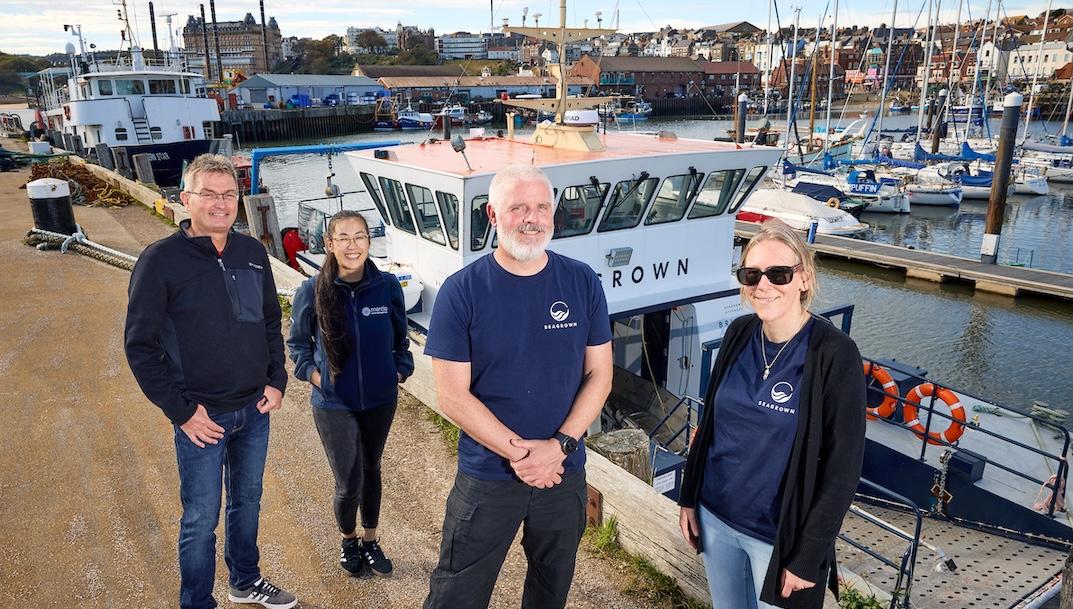
SeaGrown, which operates a 25-hectare site in the sea off Scarborough, has completed a number of successful trials with windfarm operators as well as a £2.8m government demonstration project which found its technology could ‘transform the seaweed industry’.
Seagrown has now secured a six-figure loan from NPIF II – Mercia Debt Finance to help expand its business and take on new commercial contracts.
Seaweed can improve water quality, increase biodiversity and draw down carbon. Unlike current cultivation methods, SeaGrown’s innovative Kelpedo system enables seaweed and shellfish to be grown at scale, and wherever needed. The system has also been designed to be operated by fishing boats, providing diversification opportunities for local fleets.
Seagrown was founded in 2018 by Captain Wave Crookes, a former fisherman who has held senior roles in the Royal Navy and RNLI, and marine scientist Professor Laura Robinson, who met when working on the British Antarctic Survey. The company sells a range of seaweed products in collaboration with other local businesses and runs a Plant a Tree in the Sea scheme to help corporate clients meet their sustainability goals. However, its biggest market could be ports, offshore operators and utility companies seeking ways to minimise their impact on the environment.
The company has worked with the two biggest windfarm operators, Orsted and RWE, and last year won an international biodiversity competition run by RWE. The latest project, as part of a biomass programme run by the Department of Energy and Net Zero, found that Seagrown’s technology could transform seaweed production from a cottage industry, positioning the UK to lead the way in Europe and develop a national ‘blue carbon’ capability.
The company currently employs 16 staff at its headquarters in Scarborough, but expects to double in size in the next two years and aims to open sites at other locations across the UK and Europe.
Tags related to this content:
More case studies
-
 Patient Capital Funds
Read a case study about EyeBio
Founded in August 2021 by SV Health Investors with SV Venture Partner and repeat entrepreneur, David Guyer, M.D., and Tony Adamis, M.D, EyeBio Limited (“EyeBio”) is a biotechnology company developing next-generation therapeutics for major eye diseases including diabetic macular edema (DME) and age-related macular degeneration (AMD), two leading causes of vision loss globally.
-
 Growth Equity
Read a case study about Big Potato Games
Founded in 2014 by three former advertising executives – Dean Tempest, Ben Drummond and Tris Williams – Big Potato Games is a leading creator and distributor of party and family games.
-
 Enterprise Capital Funds
Read a case study about Oxford Space Systems
Oxford Space Systems (OSS) is a leading UK space‑technology company that specialises in the design and manufacture of advanced deployable antennas and structures for satellites.